
The Struggle to Believe
The StaircaseLizzy’s skepticism develops into a limited openness to spiritual mystery without surrendering her judgment.
increasing Bearing strength in each event
 decreasing
Bearing strength in each eventdecreasingFaith Under Grief
Faith Under Grief
Catholic Rituals Seen Anew
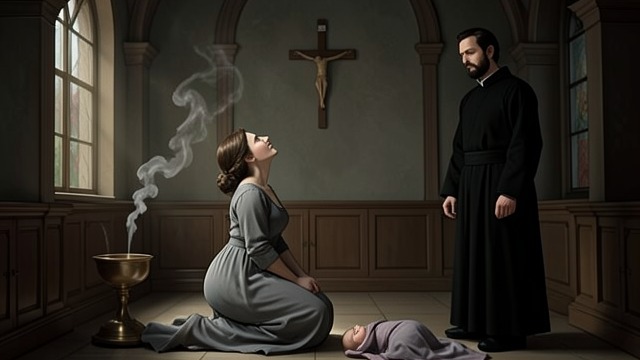
The convent’s saints, incense, Latin prayers, and stories of martyrdom overwhelm Lizzy. She compares them with the simpler Methodist faith she remembers from Independence.
Her discomfort is sharpened by Mama’s death. Religious assurances that the dead are happy in heaven do not answer Lizzy’s desire to have her mother alive beside her.
A Wish to Believe
During evening prayers, Lizzy finds herself grieving more openly than she can during the day. The ritual does not give her certainty, but it gives her a space in which sorrow can surface.
She envies those who appear to believe. Her resistance is partly intellectual and partly a defense against trusting promises that might disappoint her.
Visions and Ordinary Longing
Visions and Ordinary Longing
The Girls’ Expectations
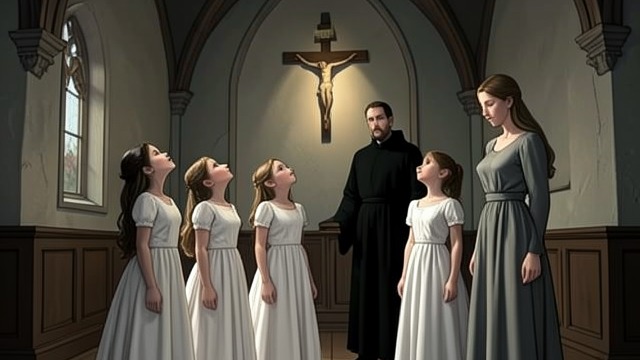
Many students at the academy pray for visions of the Virgin Mary or hope to discover a religious calling. Elinora says that some girls fake their visions, exposing the gap between public devotion and private desire.
Lizzy compares their claims with girls in Independence pretending to have seen Jesse James. She recognizes that spiritual longing can share space with performance and social competition.
The Unmet Need
Lizzy wants something she can trust, but cannot make herself accept the convent’s explanations. Her loneliness and grief are real even when she doubts the forms through which others express belief.
The novel treats doubt as a response to need, not merely an absence of faith. Lizzy’s questions keep her attentive to the difference between conviction and display.
The Carpenter’s Plain Theology
The Carpenter’s Plain Theology
A Different Kind of Prayer
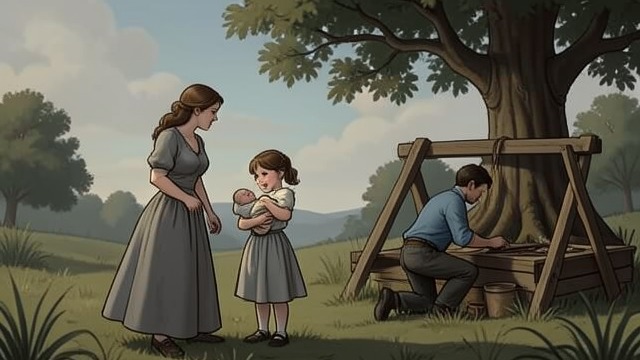
Lizzy asks José whether he prays in the church. He replies that there are other places and ways to worship, presenting faith as larger than formal practice.
His description of God emphasizes love rather than punishment. It offers Lizzy a religious idea that does not require her to accept every doctrine at the convent.
Beauty as Evidence
José points to Cleo, Elena, and the beauty of the world as reasons to think creation was meant to be enjoyed. Lizzy listens because his theology comes through care rather than pressure.
His answer does not convert her. Instead, it loosens the assumption that belief must mean surrendering her judgment or fearing divine punishment.
The Staircase and Human Work
The Staircase and Human Work
Prayer Meets a Practical Answer
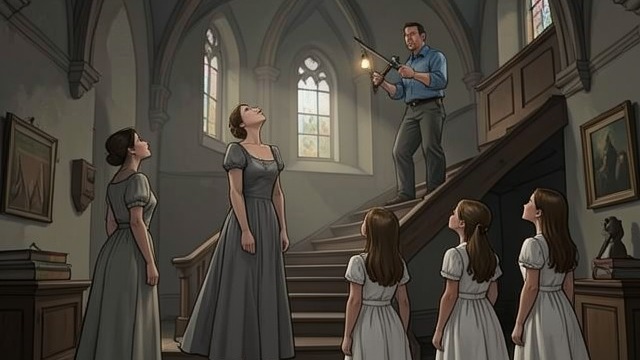
The girls pray for Saint Joseph while José works on a staircase, and later they treat its astonishing completion as proof of the saint’s arrival. Lizzy resists the leap from remarkable result to certain explanation.
Jean Baptiste Lamy offers a more flexible reading: perhaps the carpenter was the means through which help came. The suggestion lets devotion and human effort coexist.
What the Miracle Means
The staircase is not only evidence in a debate over supernatural intervention. It is a lasting piece of work that makes the choir loft usable and gives the community something beautiful to share.
Lizzy has no final proof, but she begins to see that action and faith need not cancel each other. Her skepticism becomes less absolute without disappearing.
A Window Left Open
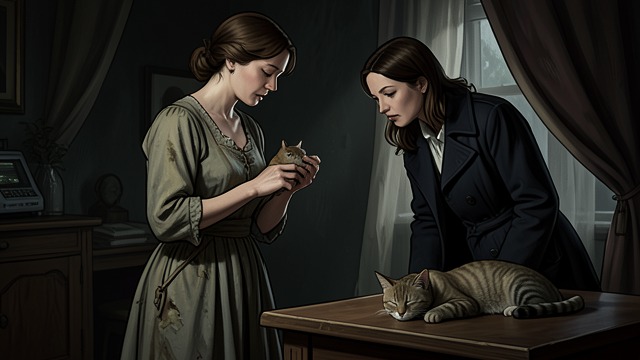
A Window Left Open
Evidence Reconsidered
Elinora confesses that she did prick Cleo’s eyes, while the carpenter had held the kitten before her recovery. Lizzy remembers Sister Roberta’s judgment that Cleo had been blind and José’s cautious hope that she might see again.
The new information gives Lizzy reason to revisit an event she had dismissed as coincidence. It does not provide proof that José was Saint Joseph.
Wonder Without Surrender
As she leaves Santa Fe, Lizzy retains her preference for explanations grounded in people and deeds. Yet she no longer closes the question of the carpenter’s identity.
The ending keeps belief provisional. Lizzy’s small opening toward mystery is not a conversion but a willingness to live with uncertainty.
The first evenings at the convent
The end of Lizzy’s first week at school
The week José’s work is interrupted
The final days before Christmas
Lizzy’s departure for Texas
